GFPc Analogs (類綠色螢光蛋白發光團)
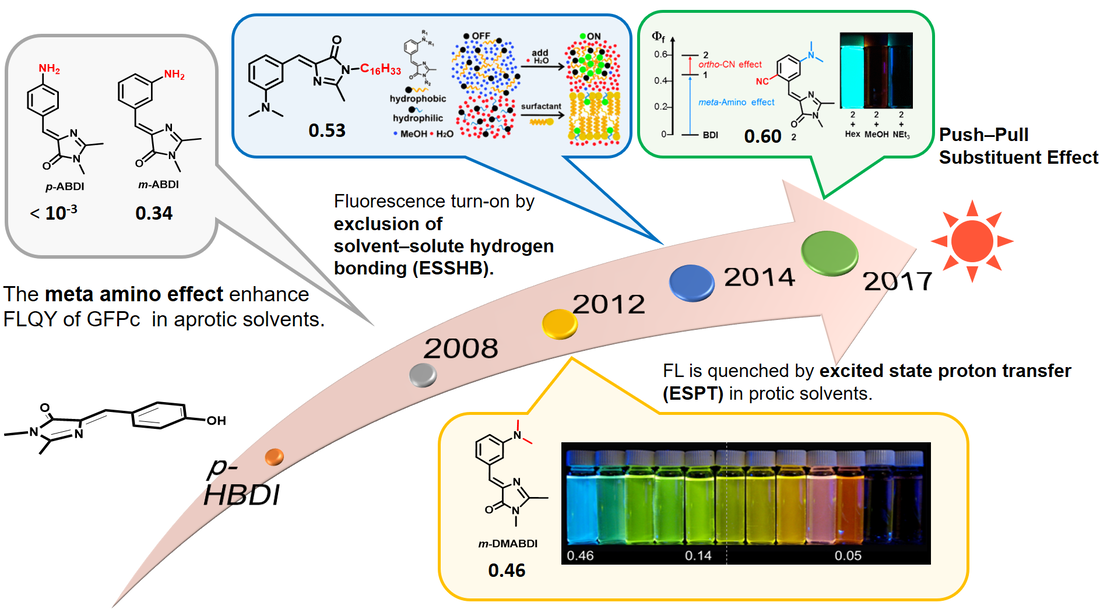
Our lab focuses on the photophysical and photochemical properties of highly fluorescent meta-amino-substituted GFPc. The following figure shows the development history of GFPc derivatives in our lab. We have successfully increased the fluorescence quantum yield from nearly 0 (p-HBDI, wild-type GFPc) to 46% (m-DMABDI).We have explored the GFPc analogues in several aspects, including hydrogen-bonding-induced fluorescence quenching, aggregation-induced fluorescence enhancement, fluorescence quantum yield enhancement, real-time cell imaging, colorful fluorescence patterning, and data encryption and decryption.
Multi-Responsive Luminescent Material (多重感應之固態發光材料)
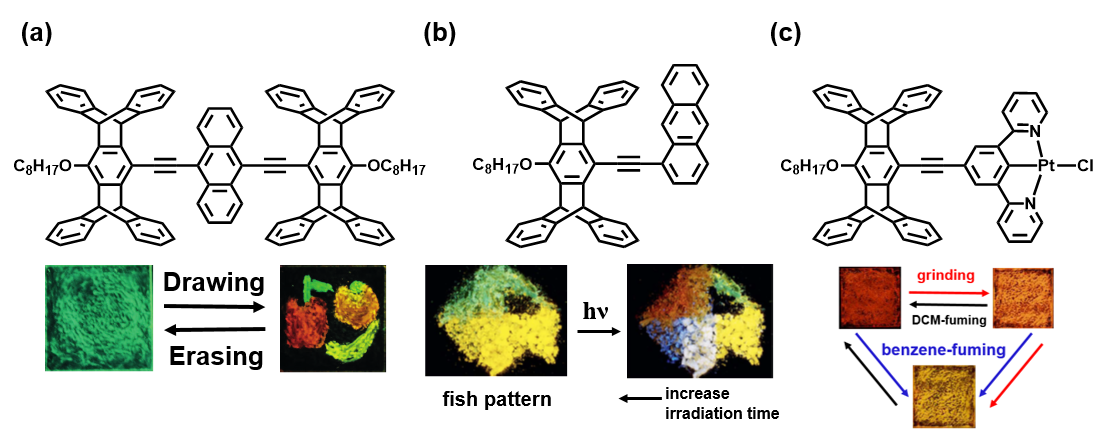
Pentiptycene has a non-planar rigid backbone which might induce different packing modes in the solid state, and thus is an excellent scaffold for the design of mechanochromic luminescent materials. Also, because of the cavities created by U- and V-shape notches, which are suitable for host-guest interaction, pentiptycene has potential for sensing application. Our recently published papers below give a preliminary but typical illustration.
Molecular Machine (分子機械)
|
|
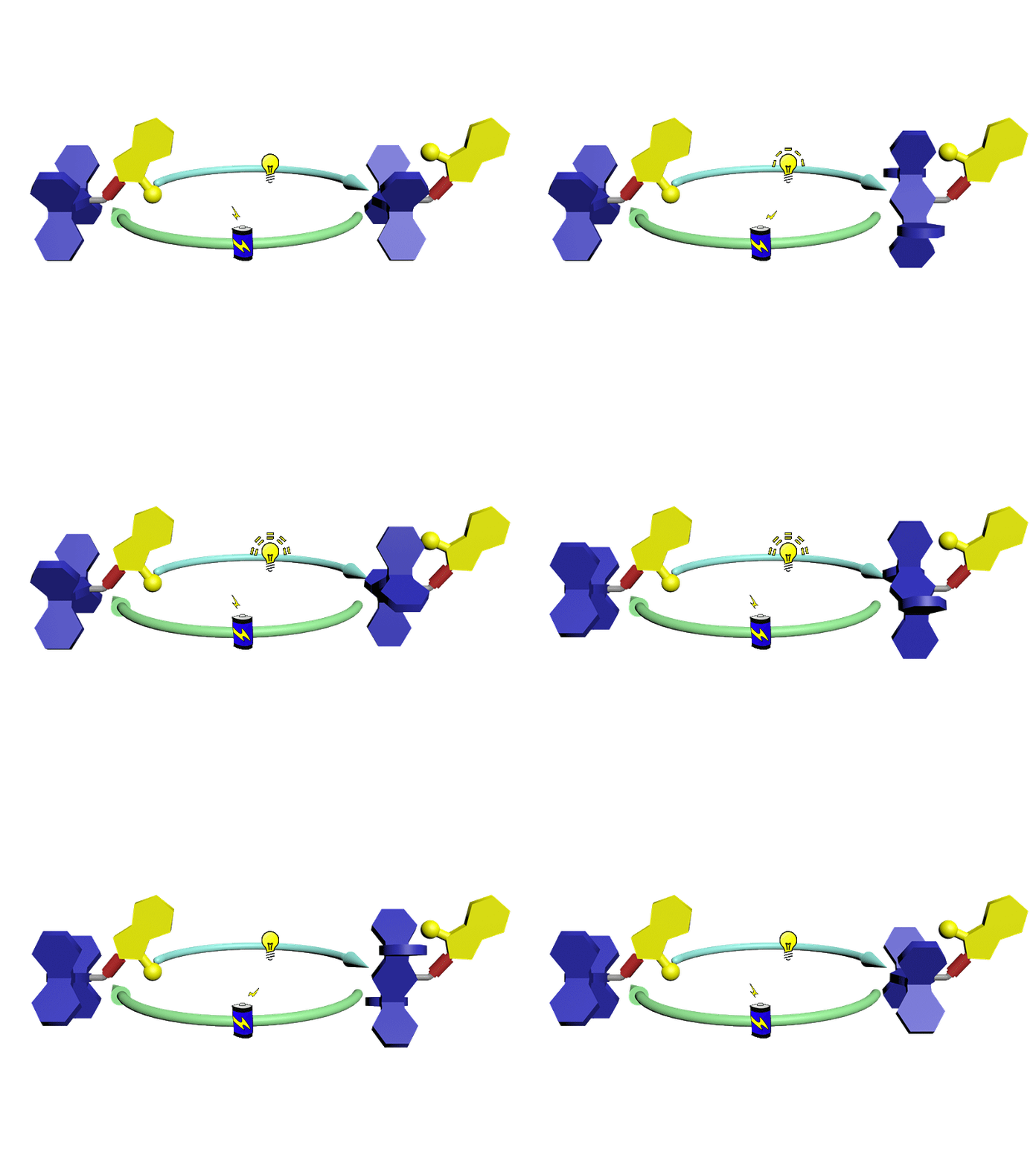
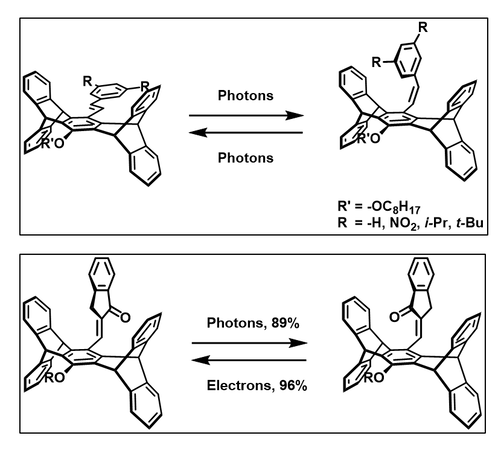
Our laboratory is engaged in the research and development of light- and electric energy-gated molecular switches. We select the rigid and nonplanar pentiptycene scaffold and several light or redox responsive elements for the design of molecular switches, which display distinct mechanical states. Thus far, we have developed a series of light- and /or redox-driven molecular brakes with excellent brake efficiency and switching ability. We aim to design more efficient and diverse molecular machines.
Supercapacitor (電容材料)
|
|
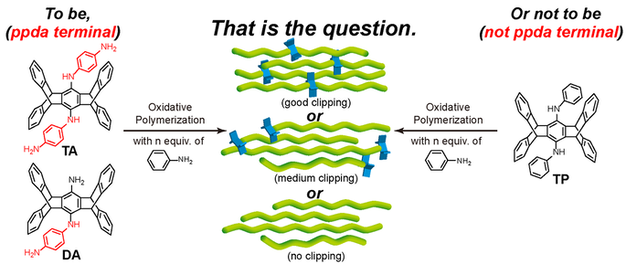
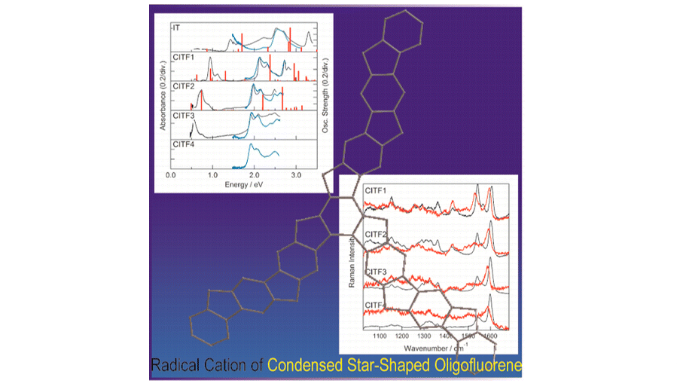
The increased energy demand has prompted the search of not only renewable energy but also efficient energy storage devices. Because of the merits of high power density, fast charge/discharge ability, and long cycle life, supercapacitors have emerged as promising energy storage devices. To achieve high charge capacity, the nature of the electrodes should be of high conductivity, surface area, and electrochemical stability. Among the various conducting materials for applications as the electrode materials in supercapacitors, conducting polymers such as polyaniline (PANI) have the advantages of low cost and low environmental impacts. However, the electrochemical stability is generally a limitation of conducting polymers.